Soft + Strong Wall Solutions
A Guide to Commercial Performance
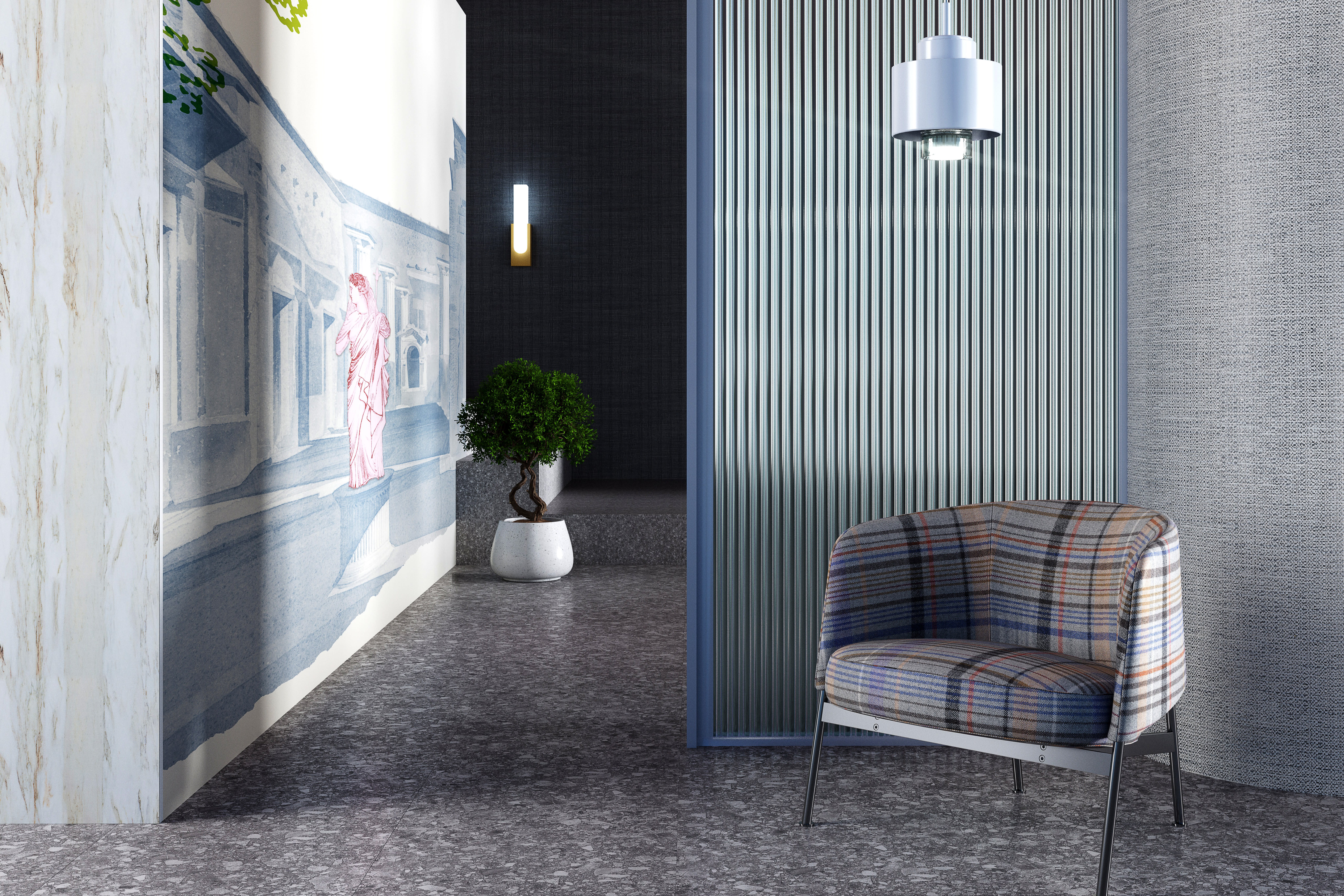
If walls could talk, they’d speak to performance first—with design close behind and built in.
Today’s commercial walls are expected to do more than ever: withstand impact, frequent cleaning, and heavy traffic while still supporting warmth, texture, and design continuity. The most successful interiors achieve this through layered wall solutions rather than a one-material approach.
From Type II and Performance Woven Wallcovering to advanced Wall Protection systems, there is a high-traffic solution for every market segment. The key is understanding what each category is built to do and where each performs best.
The Why
What High-Performance Wall Systems Solve
In commercial interiors, wall surfaces face constant contact, cleaning, and impact, especially in corridors, patient areas, and service paths. High-traffic wallcovering guides note that tested, contract-grade surfaces such as Type II are specified for these zones because they are built for abrasion resistance, scrubbability, and seam strength (not just appearance). Specification resources for high-traffic wall areas consistently recommend contract wallcoverings over decorative finishes for long-term durability.
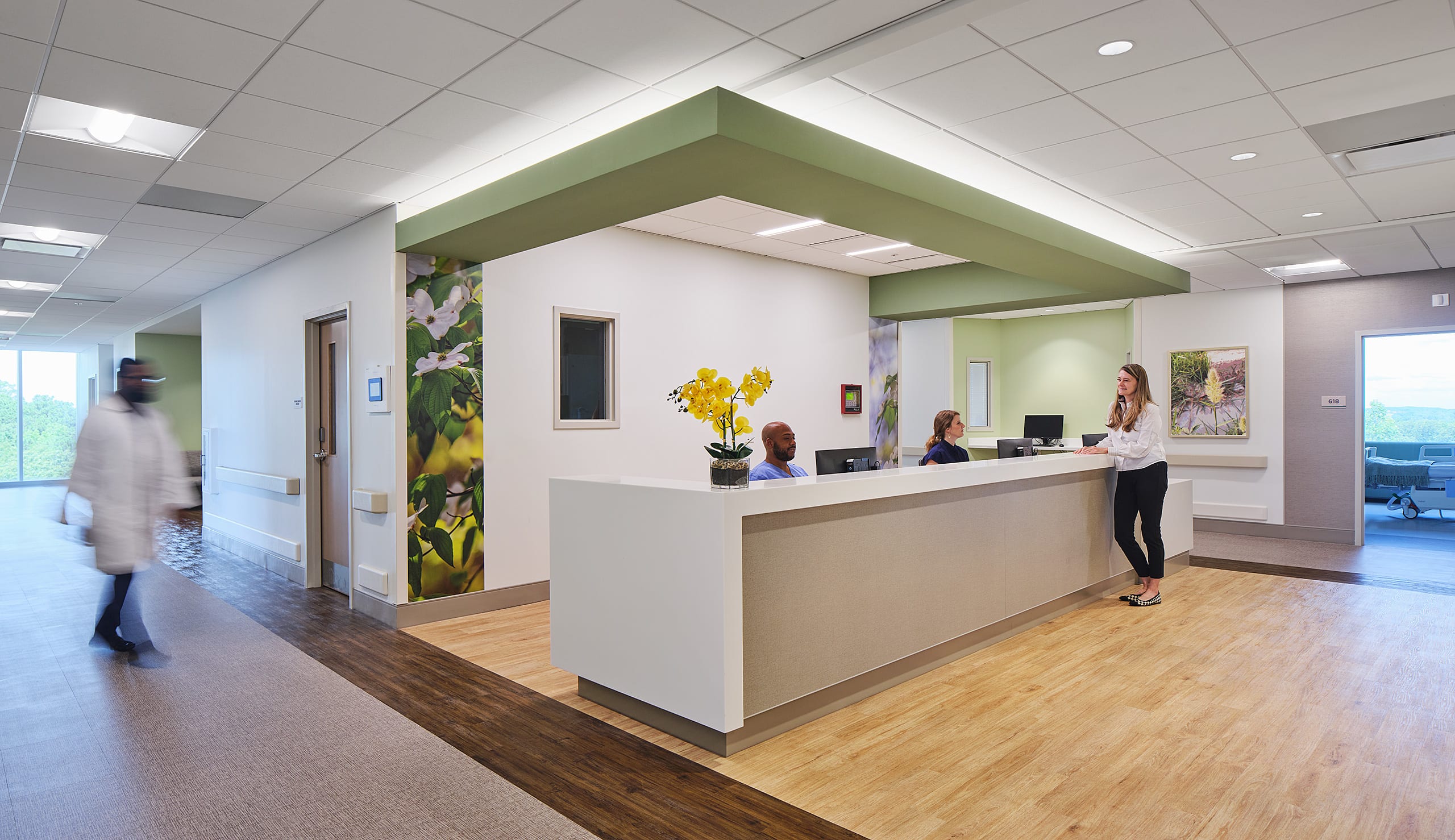
Healthcare wall system guidance further emphasizes impact- and abrasion-resistant protection in areas where cart and wheelchair collisions are common, reinforcing the need for wall protection in circulation and transport paths. Together, this supports a layered wall strategy: pairing commercial-grade Type II and performance wallcoverings with targeted Wall Protection so every zone gets the durability level it actually needs.
This layered approach is already being applied in healthcare environments such as UAB Medford Hospital (pictured) where Performance Wallcovering maintains visual continuity while targeted Wall Protection manages high-impact zones.
Wall Solutions 101:
Performance Wall Questions Designers Ask
Healthcare wall system guidance further emphasizes impact- and abrasion-resistant protection in areas where cart and wheelchair collisions are common, reinforcing the need for wall protection in circulation and transport paths. Together, this supports a layered wall strategy: pairing commercial-grade Type II and performance wallcoverings with targeted Wall Protection so every zone gets the durability level it actually needs.
Carousel
-
Q 1
What is Performance Wallcovering?
Performance Wallcovering is the engineered performance category for commercial interiors. It’s built for durability, cleanability, and heavy use while still supporting texture and design flexibility. Specify it where resilience and aesthetics must work together. -
Q 2
How is Type II Wallcovering different?
Type II is the tried-and-true commercial durability standard. It meets recognized contract tests for abrasion resistance, scrubbability, and seam strength and remains a dependable benchmark for high-traffic interiors. Performance Wallcovering may include Type II—along with specialty constructions that exceed baseline requirements. -
Q 3
Can commercial-grade wallcovering be eco-friendly & still be durable?
Yes. Sustainable wallcoverings can deliver strong performance without compromising durability. Many contract Type II and Performance Wallcoverings are available in PVC-free, recycled, or low-emission constructions that meet environmental goals while still passing abrasion and cleanability tests. Specifying sustainable materials supports design goals and broader budget costs and building performance initiatives.
Carousel
-
Q 4
How & why are Woven Performance wallcoverings different?
Woven Performance wallcoverings gain strength from textile construction—not just a surface coating. The weave contributes dimensional stability, seam integrity, and tactile warmth alongside contract performance. They’re ideal where designers want a softer, more residential or hospitality feel without sacrificing durability. -
Q 5
How is Wall Protection different from wallcovering?
Wallcovering resists wear and cleaning. Wall Protection is engineered to absorb impact, abrasion, and chemical exposure—protecting the wall assembly itself, not just the finish layer. Modern and flexible wall protection system options now include texture and embossing/etching that organically coordinates with surrounding finishes and design palettes. -
Q 6
Where should Wall Protection be used?
Wall Protection performs best in zones with repeated contact and force and is typically specified in high-risk commercial areas. Common applications include healthcare (delivery corridors, equipment walls, nurse stations, lobbies); workplace (corridors, elevator lobbies, mail rooms); hospitality (back-of-house and service routes); and education (active circulation paths). Wall Protection is most effective when strategically paired with Performance or Type II wallcovering in adjacent areas
Carousel
-
Q 7
Why is P3TEC considered a standout wall protection solution?
P3TEC is a high-performance wall protection system known for advanced chemical, impact, and abrasion (CIA) resistance. It is engineered for environments where cleaning intensity and traffic are high. It withstands repeated equipment contact and aggressive cleaning while offering embossed and textured looks that integrate with adjacent finishes—making it especially strong for healthcare, hospitality, and workplace interiors. -
Q 8
Where does Vantage fit within wall protection solutions?
Vantage is a PVC-free, stain-resistant wall protection system for high-traffic interiors and frequent cleaning zones. Offered in Vantage II and heavier-duty Vantage III, it delivers enhanced scratch, scuff, and chemical resistance with wallcovering-style installation across healthcare, hospitality, and education projects. -
Q 9
Why does bleach cleanability matter in performance wall systems?
High-traffic and healthcare environments often require frequent disinfecting with stronger cleaning agents. All Performance Wallcoverings are bleach cleanable by design, engineered to withstand repeated sanitizing without compromising color, surface integrity, or long-term durability. Always reference individual spec sheets for approved bleach dilution ratios.
How Do You Choose the Right Wall Solution for Each Area?
Start with exposure level—how much contact, cleaning, impact, and functional demand a wall will see. Performance Wallcovering and Type II serve general high-traffic zones, Performance Woven Wallcoverings add texture with strength, and Wall Protection systems protect higher-impact areas. Matching the solution type to wall condition helps keep performance consistent across the space.
Layered Wall Strategy: The Takeaway
High-performing interiors rarely rely on one wall surface alone. The most successful specifications combine:
Performance Wallcovering: performance + design balance
Type II Wallcovering: tried-and-true durability
Woven Performance Wallcovering: textile texture + strength
Wall Protection (like P3TEC or Vantage): high-impact CIA resistance zones
Used together, these wallcovering systems deliver comfort at the surface and strength underneath—soft in feel, strong in performance.

Sources
Caligari Gerloff Painting. Wall Coverings for High-Traffic Areas.
https://www.caligarigerloffpainting.com/wall-coverings-high-traffic-areas/
Studio Forma. Embracing Layered Interiors in Corporate Interior Design.
https://www.studioforma.ca/embracing-layered-interiors-in-corporate-interior-design/
The Wallpaper Company. How to Choose the Right Wallpaper for Your Commercial Project.
https://www.thewallpapercompany.com/post/how-to-choose-the-right-wallpaper-for-your-commercial-project-in-the-us
The Wallpaper Company. Wallcovering 101: Your Essential Guide to Specifying High-Performance Wallcoverings.
https://www.thewallpapercompany.com/post/wallcovering-101-your-essential-guide-to-specifying-high-performance-wallcoverings