Q&A with 13&9 Design and Fractals Research
Exploring fractals, wellness & design innovation with Momentum

Photo above: Anastasija and Martin Lesjak from 13&9 Design with Prof. Richard Taylor from Fractals Research at the FRACTAL CHAPEL at the University Hospitality in Graz, Austria ©Jackob Kotzmuth
What if the indoors could mirror the calm of the outdoors? That question guided Momentum’s collaboration with Anastasija Lesjak and Martin Lesjak of 13&9 Design and physicist Dr. Richard Taylor of Fractals Research. Together, we translated nature’s stress-reducing fractal patterns into the Renaturation Collection—an award-winning NeoCon debut that redefined wellness in commercial interiors.
We interviewed the team about their backgrounds, their creative and analytical process—and why wallcoverings became the ideal canvas for bringing fractals into the built environment.
What inspired you to explore fractals through the lens of surface design?
Anastasija Lesjak: Using fractal patterns for surface design aligned poetically with our “renaturation” concept, which relates to the process where nature and natural analogs spread organically into the built environment.
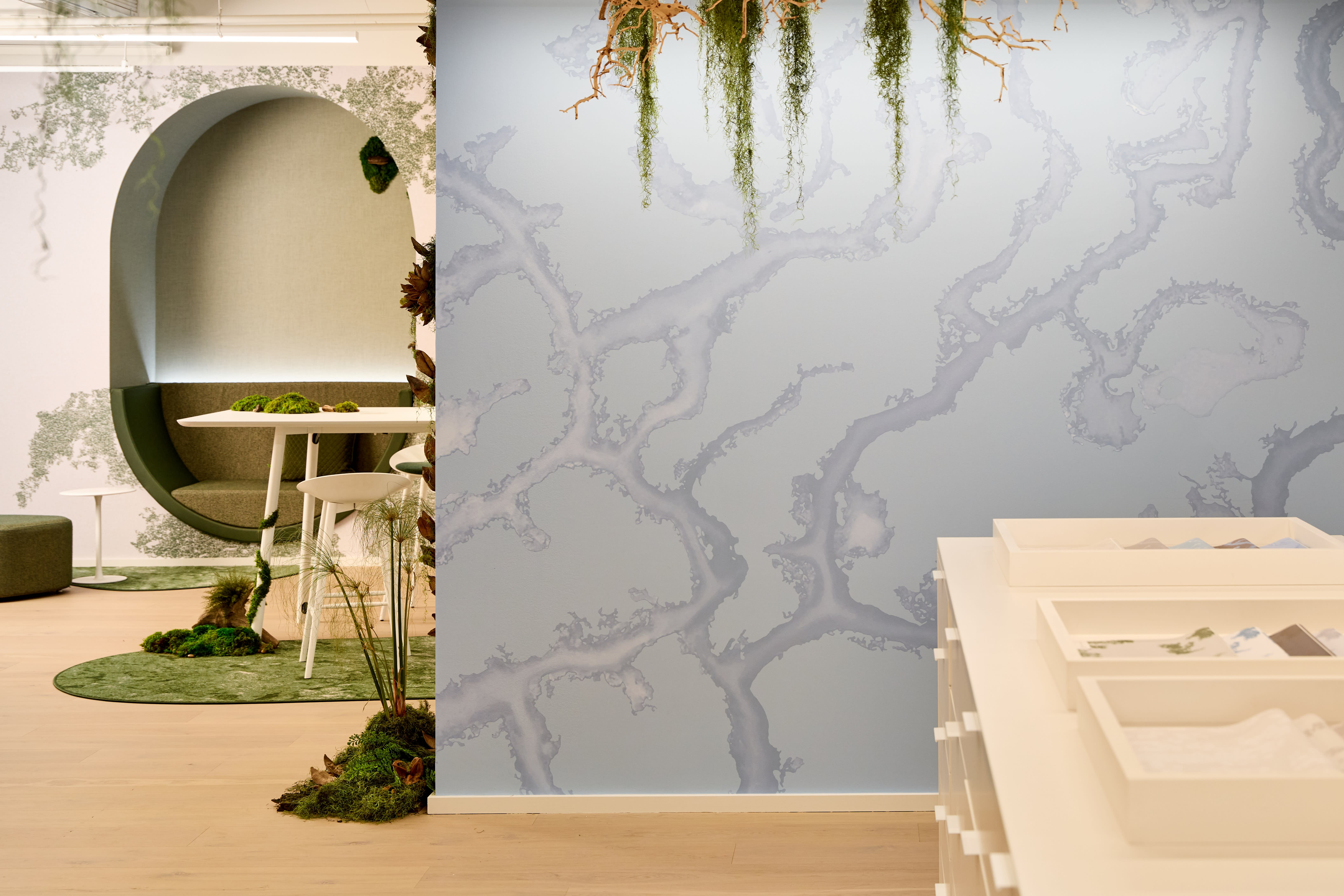

Our main idea for this collection was to “renaturate” walls—significant surfaces within a space—into a state of natural flourishment in a visual sense. This concept also carries the narrative of empowering renaturation in our habitats more broadly.
At the same time, our approach promotes health and well-being by integrating fractal patterns found in nature. Based on Prof. Taylor’s research, these fractals add value to the built environment through their aesthetic appeal and their potential to reduce stress.
What does the creative process look like when working as a trio—designers and a physicist (Dr. Richard Taylor of Fractals Research)—on a project like this?
Anastasija Lesjak: Our collaboration, called ScienceDesignLab, was formed in 2018 with the mission to create science-informed fractal designs for the built environment. It’s an international exchange between the scientific team at Fractals Research in Eugene, Oregon, and our design studio at 13&9 Design in Graz, Austria.
The patterns we created for Momentum build on Prof. Taylor’s 25 years of biophilic research, with the aim of reconnecting people of all ages to the health benefits of nature’s fractal beauty.
The key to the process lies in its diverse expertise—the combination of design supervision, scientific supervision, and manufacturing supervision ensures no weak links as the designs progress to completion. As with all interdisciplinary work, creativity emerges as a phenomenon beyond the capabilities of the individual teams.
Each pattern feels rooted in nature without being too literal. What qualities were most important to capture in Fractal Bark, Moss, and River?
Martin Lesjak: Referred to as the “fingerprint of nature,” fractals are prevalent in many natural scenes—trees, rivers, and mountains are common examples.
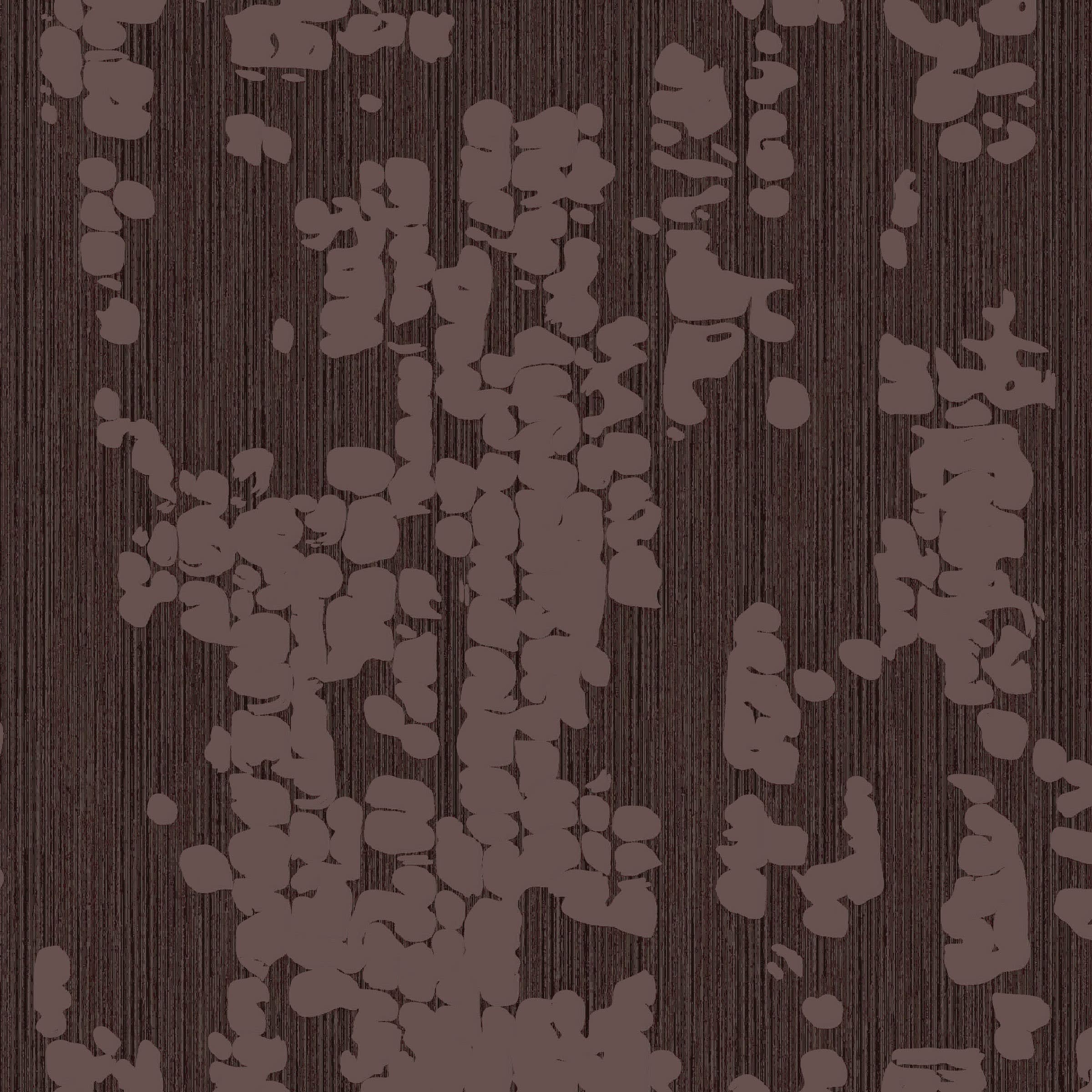
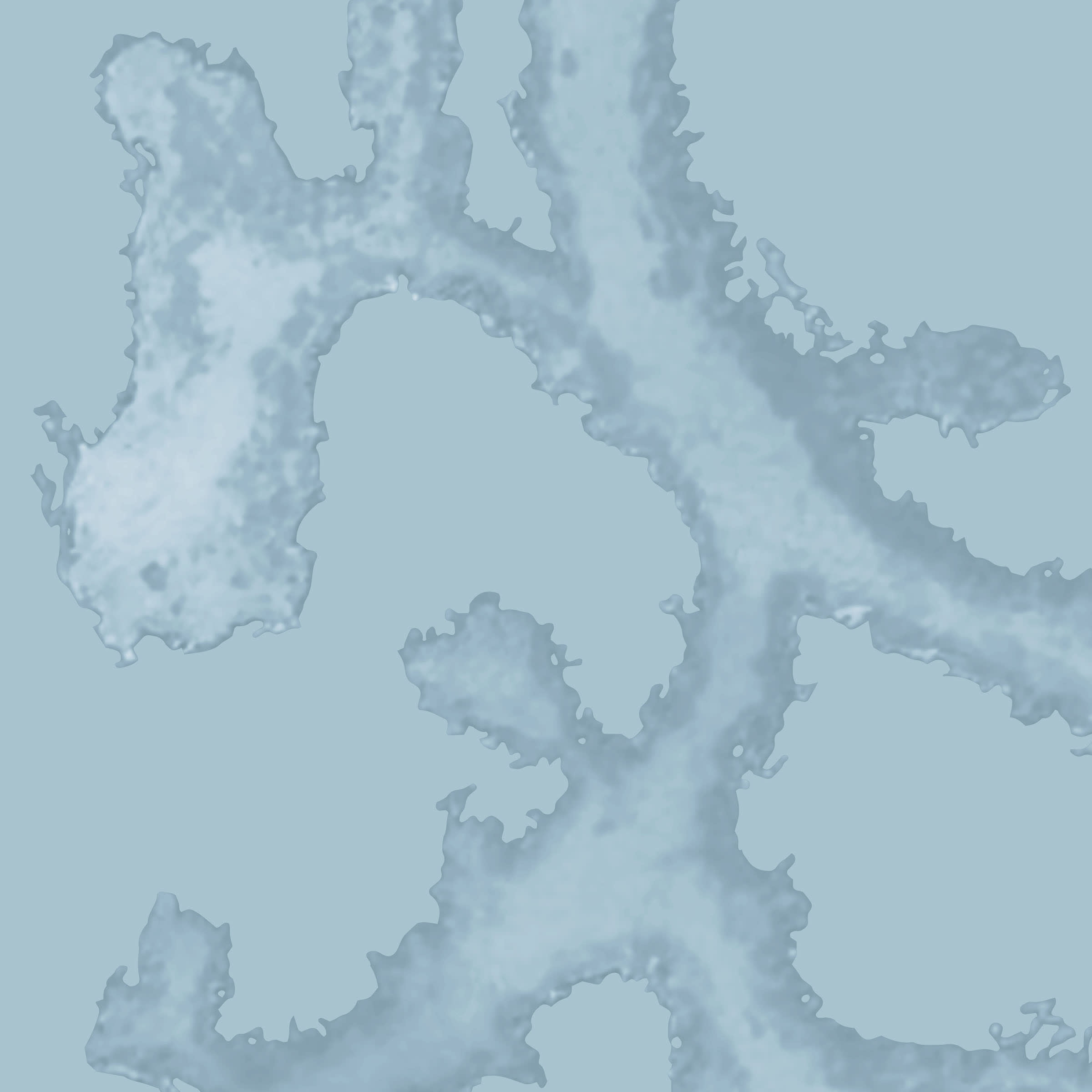
In the Renaturation Collection for Momentum Textiles & Wallcovering, the patterns Bark, Moss, and River were created from the organic flow and algorithmic growth of those natural “seeds.” This flexible nature-science approach combines environmental inspiration with quantitative analysis, abstracting, adapting, and rearranging the patterns to strengthen both their fractal quality and D value (also known as Decimal Reduction Time).
Renaturation: 3 Fractal-Inspired Wallcoverings



We often talk about wellness in healthcare—but what about spaces like corporate offices, schools, or even community spaces like yoga studios? Where do you envision these wallcoverings supporting well-being in everyday life?
Dr. Richard Taylor: Our eyes are naturally stimulated by the visual complexity of fractals. Mid-complexity fractals are the most common in natural scenery, and their familiarity allows our brains to process them with ease. This “fractal fluency” places us in a visual comfort zone.
Fractals can both relax and stimulate us, depending on their level of complexity. We adjust this complexity—quantified by a parameter we call the D value—based on three factors: the type of building, the tasks taking place inside, and the needs of the occupants. Low-complexity patterns have a low D, while higher D values provide greater stimulation.
Through our shared evolution, all humans benefit from the neuro-aesthetic balance between stimulation and relaxation. Neurodiverse needs can also be supported by selecting the most appropriate D value. These health benefits extend across offices, schools, hospitals, and community spaces, especially since people spend over 90% of their lives indoors.





How do you determine the right scale, complexity, or visual rhythm when translating fractals into commercial patterns?
Martin Lesjak: To generate fractal patterns for commercial use, we developed two novel techniques. 'Morphing Fractals' create new versions of natural fractal “seeds” by calibrating and morphing their characteristics, while 'Growing Fractals' use design software to “grow” entirely new fractal landscapes.
For example, the 'Growing Fractals' process begins with “fractal flights” (or “levy flights”)—movement patterns used by animals when searching for food. Much like a bird dropping seeds as it lands, the computer inserts our fractal “seed” at each location between the flights. Since the human eye also follows fractal motion, these designs create a deep psychological resonance with the observer.
Patterns are then selected and modified based on aesthetics, spatial context, scale, complexity, design principles, and manufacturing requirements. Each also undergoes analysis software to confirm the D value and fractal quality are preserved in all tiling arrangements. Sometimes weeks of back-and-forth between Graz and Eugene are required before a design is ready for production.
Based on this research, using only nature photography would not achieve the same range of stress-reductive outcomes. It would remain decorative, rather than scientifically validated for well-being.
Much of your work is grounded in interdisciplinary thinking. How do research and intuition play together in your design process?

Martin Lesjak:
This powerful integration of architecture, design, art, and science manifests in fractal designs for the built environment that psychology experiments confirm can reduce stress, enhance cognitive skills, and promote well-being. In our collaboration, scientific research and artistic intuition play equal roles, alongside spatial thinking and design skills that scale from product design to complex architectural projects.
Anastasija Lesjak:
Our work is therefore published in many leading architectural and scientific outlets, including The Handbook of Neuroscience and Architecture (Routledge, 2025) and a special edition on biophilic design in Frontiers in Psychology.
Dr. Richard Taylor:
To create fractal patterns that perform well in the built environment, we aim for an optimal balance between design aesthetics and scientific characteristics.
For this reason, we developed computer programs flexible enough to accommodate both needs. We can select images based on their aesthetic quality, and then the program adapts them to the correct level of complexity to maximize health and well-being benefits.
What does “designing for wellness” mean to you today—and how has that evolved over the past few years?
Anastasija Lesjak: Designing for wellness, including biophilic design (nature-loving), emphasizes the inherent human need to connect with nature. While the primary goal of biophilia is to bring natural elements into built environments, complementary approaches aim to maximize exposure to natural analogs where direct access is limited. Research in biophilic and multisensory design is also advancing the restoration of hearing, vision, touch, and smell.
In recent years, increased urban living and extended time indoors have had a noticeable impact on well-being. Surrounded by predominantly Euclidean spaces, we now see growing awareness of wellness-driven design. Companies, institutions, and individuals increasingly recognize its vital role in supporting health.
What was it like working with Momentum to bring these research-based designs into real-world, scalable wallcoverings?
Dr. Richard Taylor: It’s been a 25-year journey of research, shaped by collaborations with experts around the world. With Momentum, we’ve been able to transform that foundation into patterns now appearing on walls within many types of buildings
.
I’ll never forget the first time I saw our Renaturation wallcoverings installed. On screen they already looked strong, but on the wall they were really striking. The Momentum patterns are my favorites of all the fractal designs we’ve created to date.


Lastly, what’s one design element you’re each personally obsessed with right now—fractal or not?
Anastasija & Martin Lesjak: Light and the impact of natural and artificial light on space. We are truly grateful, to be able to work and complete our recent architectural project, the FRACTAL CHAPEL at the University Hospitality in Graz, Austria. The so-called "Space of Light" is based on research in neuroscience and environmental psychology, which has been integrated into the design principles.
The interior, designed by INNOCAD architecture, incorporates biophilic design principles, including natural materials, and dynamic fractal patterns. Caused by the play of light and shadow of both, natural sunlight and artificial light. The design aims to create a calm and welcoming atmosphere that supports rest and recovery within the clinical environment.
Explore More 13&9 Design and Fractals Research