Designing for Acoustic Comfort
Soft Spaces & Sensory Ease in Commercial Interiors
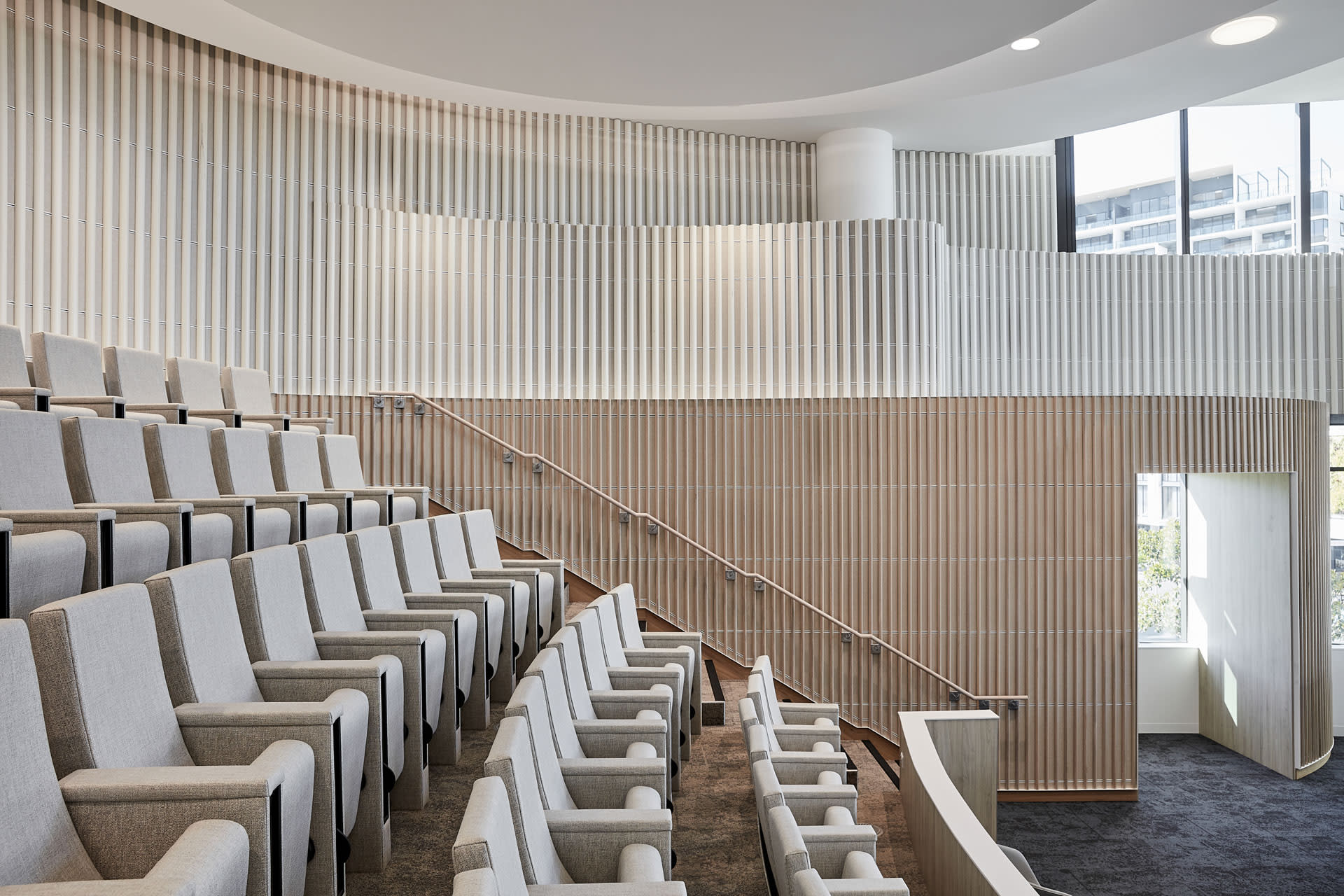
As interiors evolve toward warmer minimalism and more intentional living, acoustic comfort has become a foundational layer of design. Once treated as a technical requirement, sound is now part of the sensory experience—shaping how a space feels, supports wellbeing, and functions day to day.
Across workplace, healthcare, education, and hospitality environments, designers are addressing a common challenge: spaces that look calm but feel overstimulating. The solution isn’t silence; it’s balance. This functional shift aligns with WGSN-led design themes around quiet luxury, tactile comfort, soft geometry, and healthy spaces, where performance is embedded subtly into material and form rather than added on.
The Why: What Sound-Sensitive Interiors Solve
Even the most serene spaces can feel exhausting when acoustic comfort and sound control are not properly managed. Research cited by Architizer references findings from Steelcase and Ipsos showing that employees can lose up to 86 minutes per day due to noise distractions in open-plan environments. Background noise isn’t just disruptive; it creates cognitive load that makes it harder for workers to focus, collaborate, and recover throughout the day.
The World Economic Forum further summarizes research from the World Green Building Council suggesting that excessive noise contributes to measurable drops in productivity. Sound, though often invisible, plays a critical role in how people experience space—mentally, emotionally, and physically.

Acoustic Comfort 101
Common Acoustic Questions Designers Ask
Sound is one of the most influential (yet least visible and understood) layers of interior design. Below are some of the questions designers are asking as acoustic comfort becomes a baseline expectation across workplace, education, healthcare, hospitality, and other commercial interiors.
Carousel
-
Q 1
Why does this space feel loud even when it looks calm?
In most interiors, discomfort comes from reverberation, not overall noise levels. When sound reflects repeatedly off hard surfaces—walls, ceilings, and floors—it builds up and lingers, leading to fatigue and distraction. Design shorthand: When sound has nowhere to land, even quiet spaces feel restless. -
Q 2
What’s the difference between reverberation & background noise?
Reverberation is how long sound remains in a space after it’s made. Background noise comes from ongoing sources like HVAC systems, traffic, or equipment. Both matter, but reverberation is often the primary cause of acoustic discomfort in open, modern interiors with hard finishes. -
Q 3
What’s the difference between sound absorption & diffusion?
They work best together. Sound absorption reduces echo by soaking up sound energy Sound diffusion scatters sound to prevent harsh reflections and dead spots. Autex emphasizes that spaces feel most natural when absorption and diffusion are balanced—supporting speech clarity and comfort without flattening the environment.
Carousel
-
Q 4
What does NRC actually tell me?
NRC (Noise Reduction Coefficient) measures how much sound a material absorbs on a scale from 0.0 to 1.0. 0.0 = fully reflective 0.45–0.65 = moderate absorption 0.70–0.90+ = high absorption for calmer, clearer spaces Designer shorthand: Higher NRC = softer sound, less echo, more ease. -
Q 5
How does acoustic design support wellness & focus?
Research consistently shows that poor acoustics contribute to listener fatigue, stress, and reduced concentration. Autex highlights that acoustic comfort supports focus, speech clarity, recovery, and overall wellbeing—especially in open and shared environments, where untreated sound leads to constant cognitive strain and listener fatigue, even when spaces appear quiet. -
Q 6
Are acoustic solutions compatible with sustainable design goals?
Yes. Many acoustic materials are now made with high recycled content, low-VOC performance, and third-party transparency tools. Autex Acoustics® notes that sustainable material innovation and circular design can support both environmental responsibility and acoustic comfort—without compromise.
Acoustic Comfort, Explained Simply
At its core, acoustic comfort is about balance. Both functionally and visually, sound design is not about eliminating noise, but shaping it.
Two helpful ways to think about acoustics is that the goal is to:
Absorb sound within a space to reduce reverberation and echo (often described through NRC, Noise Reduction Coefficient).
Manage sound travel between spaces when privacy or separation matters. Ceiling and wall assemblies support and address this sound attenuation.
Rather than treating acoustics as a technical overlay, designers are increasingly integrating performance through material choice, placement, and form. This modern approach plans and builds sound control into a part of the architecture itself.
From Trend to Application
Acoustic Cocooning
Across global design forecasts, a consistent shift is taking shape toward softer surfaces, tactile comfort, warmer minimalism, and interiors designed to support health and wellbeing. Together, these directions reflect a broader desire for spaces that feel grounding, human, and emotionally supportive.
Acoustic comfort fits naturally into this language. Soft geometry helps diffuse sound while easing visual intensity. Craftsmanship and bespoke details translate into purposeful layouts and tuned installations. Quieter backdrops allow texture, color, and materiality to breathe.
This approach also aligns with growing awareness around neuro-inclusive design, where regulating sensory input—especially sound—supports a wider range of focus, comfort, and autonomy across shared spaces.
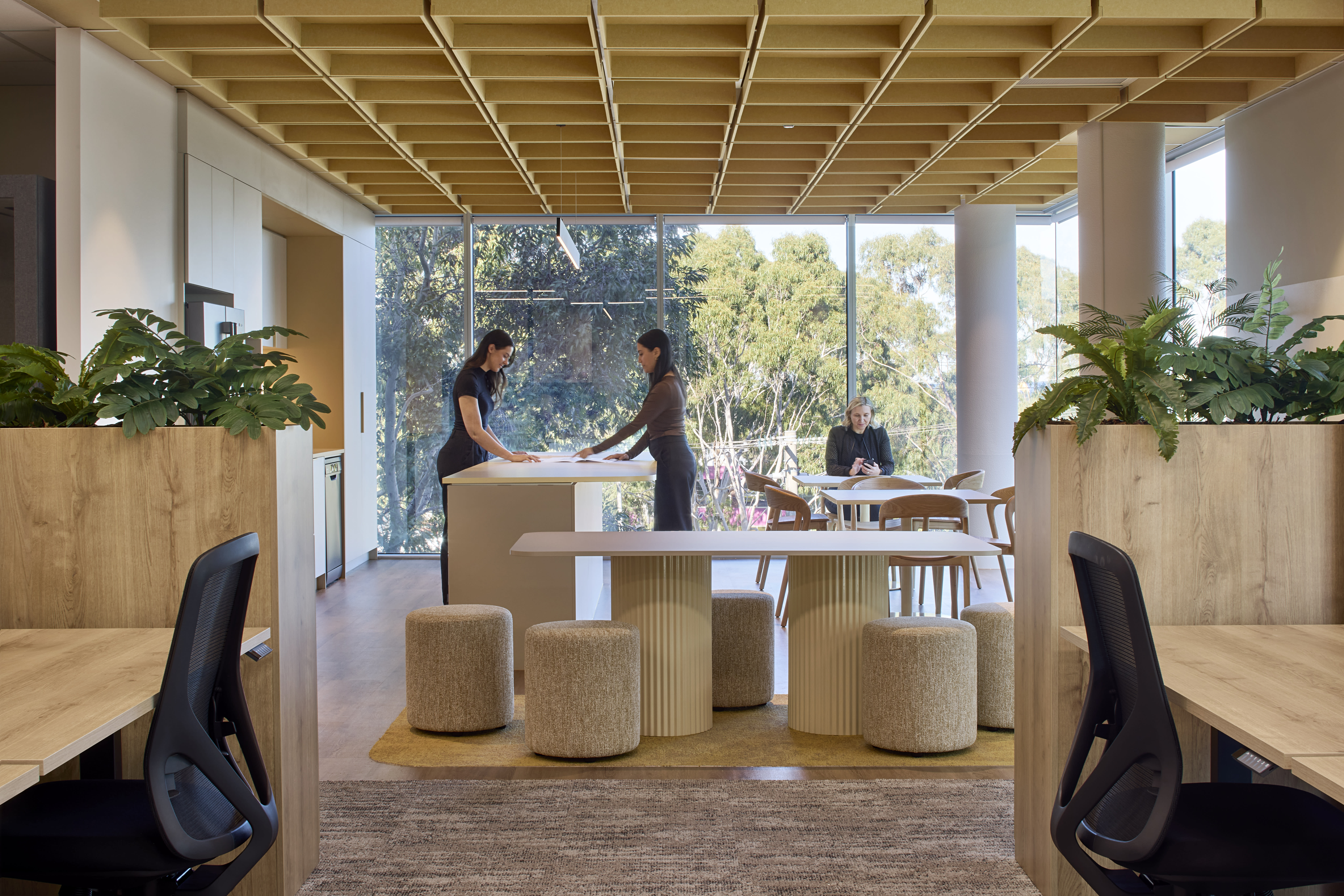
Sustainable Multisensory Comfort
WGSN’s Healthy Walls & Floors forecast underscores the growing demand for low-tox materials, product transparency, and surfaces that support both environmental and human health. As acoustic comfort becomes more integral to interior design, sustainability is increasingly expected to sit alongside performance and aesthetics.
Across Momentum’s acoustic collections and partnerships, many solutions are designed with this dual responsibility in mind. Autex Acoustics® products are carbon neutral and manufactured using high recycled-content PET, low-VOC materials, and third-party transparency certifications such as EPDS, HPDs, and Declare labells that support healthier interiors and green building goals. Muratto’s cork-based acoustic surfaces extend this ethos through renewable, recyclable materials that offer natural sound absorption, tactile warmth, and a reduced environmental footprint.
Together, these approaches reinforce sustainability as an integrated layer of acoustic comfort—quietly supporting both people and the planet over time.
Sources
Autex Acoustics®. Seven Insights into Acoustic Wellness in the Workplace.
https://www.autexacoustics.com/resources/news/seven-insights-into-acoustic-wellness-in-the-workplace
Autex Acoustics®. The Importance of Sound Absorption and Diffusion.
https://www.autexacoustics.com/resources/news/the-importance-of-sound-absorption-and-diffusion
Autex Acoustics®. Designing for Acoustic Control in a Modern Office.
https://www.autexacoustics.com/resources/news/designing-for-acoustic-control-in-a-modern-office
Autex Acoustics®. Why Should Acoustics Matter to Designers?
https://www.autexacoustics.com/resources/news/why-should-acoustics-matter-to-designers
Architizer. Acoustics and the Open Office Plan.
https://architizer.com/blog/practice/details/acoustics-open-office-plan/
WGSN. Healthy Walls & Floors: Inclusive and Sensory-Led Interior Design.
https://www.wgsn.com/interiors/article/682c4ea066c6b02b5b334b59?lang=en&product=li&reportId=682c4ea066c6b02b5b334b59
WGSN. Inclusive Design & Neurodiversity in the Workplace.
https://www.wgsn.com/interiors/article/69037bbda4ddc3937ab0ce9d?lang=en&product=li&reportId=69037bbda4ddc3937ab0ce9d